
Maybe you’ve packed the hospital bag twice. You’ve watched the videos, read the books, and practiced the double hip squeeze with your partner on the living room floor. And still, somewhere in the back of your mind, there’s a quieter question: how do I get my head ready for this?
If you’re scared of giving birth, or just not sure how to mentally prepare for labor, you’re not alone. We have this conversation with almost every family we work with. Most people picture doula support as the physical stuff, like counterpressure and position changes. Those matter. But in our experience, the mental and emotional prep matters just as much, and sometimes more.
In this post, we’re walking through what we actually talk about with our own clients. How to look at your fears instead of hiding from them. How labor affirmations really work. The difference between preparation and control. And what it means to surrender to birth (spoiler: it’s not giving up).
Labor is a physical journey, and that’s mostly how our culture talks about it. But what we see at births week after week is that the body and the mind don’t work separately. When a mom feels safe, heard, and supported, her body tends to follow. When she doesn’t, labor can feel a lot harder.
Stephanie often borrows a phrase from the workout world with her clients: your body can achieve what your mind believes. Think about someone running a marathon. Their legs can usually keep going. The real question is whether their brain and emotions talk them out of it. Labor can feel a lot like that.
There’s research behind this, too. A study of more than 2,200 women in Norway found that women with a significant fear of childbirth had longer labors on average, even after the researchers accounted for things like epidurals and inductions. We’re not sharing that to add one more worry to your list. We’re sharing it because it shows that tending to your mind is real birth prep, not a bonus.
One honest note: mental prep takes practice. It’s not something that shows up automatically on the day you go into labor. That’s why we encourage starting well before your baby decides to arrive.
Join How 2 Mom’s childbirth education class—available online or in-person in the Twin Cities!
✔ Expert guidance from experienced birth professionals
✔ Flexible learning – self-paced online or hands-on in-person
✔ Comprehensive prep – labor stages, pain management & postpartum care
Take the stress out of birth prep and feel empowered every step of the way.

Yes. There’s this idea floating around that you’re not supposed to be afraid of labor. Of course it would be lovely to feel zero fear, but that’s not the reality for a lot of people. And brushing fear under the rug doesn’t make it go away. It usually just shows up later, often in the middle of a contraction.
Mentally preparing for birth isn’t about erasing fear completely. It’s about learning how we respond to that fear, and how we get back to a place where we feel safe.
A good place to start is getting curious about yourself. You might already know a lot of this, or you might need a little reflection time. Some questions we ask our clients:
Nikki puts it simply: this isn’t about building a whole new process. What worked for you before you were pregnant can still work now. We just change the narrative a little.
Having these conversations with your partner matters too. Sometimes the hardest one is simply saying, “This is what I’m afraid of.” That sentence opens the door to real support.
If you already work with a therapist, this is a great season to keep going and bring birth into those sessions. And if your fear of labor feels heavy enough that it’s affecting your sleep, your relationships, or your day-to-day life, a mental health provider who specializes in the perinatal period can be a wonderful part of your team. We often work right alongside them.
One of the most helpful things we can do with fear is meet it with information. Once you understand how labor progresses and the role your body, your hormones, and your baby each play, it starts to feel a lot less like a giant unknown. Many of our clients tell us they actually started looking forward to labor once they understood it. That shift makes a real difference in your mental state.
Positive birth affirmations are one of the simplest tools we have. They can sound a little fluffy at first, but here’s what’s happening: you’re training your brain to go somewhere new during a contraction.
Instead of “this hurts, this hurts, this hurts,” you practice a different loop. One we love is: inhale strength, exhale fear. With every breath out, you’re letting some of that fear leave your body.
Here’s the part people don’t usually expect. Labor affirmations work best when your birth team knows them. In the intensity of labor, it’s really common to forget every word you practiced. When your partner or doula knows the phrases that speak to you, they can bring them back to you. And because you’ve practiced, your brain goes, “Oh yeah. I remember that.”
Generic phrases don’t land for everyone. Sometimes “you got this” just doesn’t feel helpful in the moment. We want to speak your language. A few ways to find words that fit:
Just as important as the words that help are the ones that don’t. We ask every client: is there anything you can’t stand hearing when you’re stressed?
Nikki’s top pick, and honestly, almost everyone’s: “Just relax.” (Thanks for that. Would if I could.) Make your “please don’t say” list and share it with your team just like your affirmations.

This is the part of the conversation we get most excited about. With our clients, we like to picture two columns.
The first column is your controllables. Where you choose to give birth. Who is on your birth team. What your preferences are. What you hope for. These are real, and they matter.
The second column is your uncontrollables. And here’s something we find really beautiful: every birthing person has this column. No two births are the same, but every single one includes moments where surrender needs to happen. It’s one thing that connects all of us.
That can be really hard, especially for Type A personalities. As women and moms, many of us have spent our whole lives being praised for planning, predicting, and controlling. Stephanie spent years in the legal field before becoming a doula, where everything was charted and black and white. She’ll tell you that becoming a mom and a doula was one of the best things for her personality, because it taught her how to let things unfold.
We think this part is critical, because surrender has a reputation. It can sound like folding, giving up, or letting other people decide for you. That’s not what we mean. Surrendering to labor does not mean:
In birth, surrender looks a lot more like total adaptability. It’s trusting yourself to handle one moment at a time. You’ll hear us say it constantly in the birth room: one contraction at a time, one wave at a time, maybe one position at a time.
It’s allowing your body to do the work. We can’t force labor or chase it. Honestly, we also can’t tell you how much longer it will be, or whether the next phase will feel different. Nobody in that room knows the story yet. We just get to watch it unfold, and there’s a quiet kind of magic in that.
Surrender also means staying present. Instead of trying to run from a hard moment or rush to the next phase, you let yourself be in it.
Another way to think about surrender is the difference between preparation and control.
Control often sounds like blanket statements. “I have to go into labor on my own.” “I can’t get an epidural.” “I have to labor in the tub.” “I can’t be induced.” When we hear these, we gently ask why that feels so important. Often, together, we find that the rigid version isn’t actually serving the mom. And if we don’t talk about it before labor, a birth that goes differently can leave her feeling like something was taken from her, no matter how her baby arrives.
Preparation sounds different. “I know my preferences. I know my options. I know my coping tools.” That’s why we talk about birth preferences instead of birth plans. Language matters.
If you’re not sure where to start, our free birth plan outline works beautifully as a birth preferences template. Use it to get your hopes on paper, then add a few honest “what if” notes beside them.
Part of preparing is walking through the physical what-ifs and the emotional ones too:
Looking back, there’s a big difference between “I knew that was a possibility” and “I only had one vision, and it didn’t go that way.” That’s the emotional work of preparation.
It can. If a laboring mom isn’t feeling safe, heard, or emotionally cared for, her body may respond. We see labor slow down or fizzle out. Sometimes contractions keep coming, but the cervix doesn’t change much. So much of that isn’t only physical. It’s emotional and mental too.
That’s why your environment matters so much. If you arrive at the hospital and someone on your care team feels dismissive of your preferences, it’s natural to put a wall up. Your body notices that.
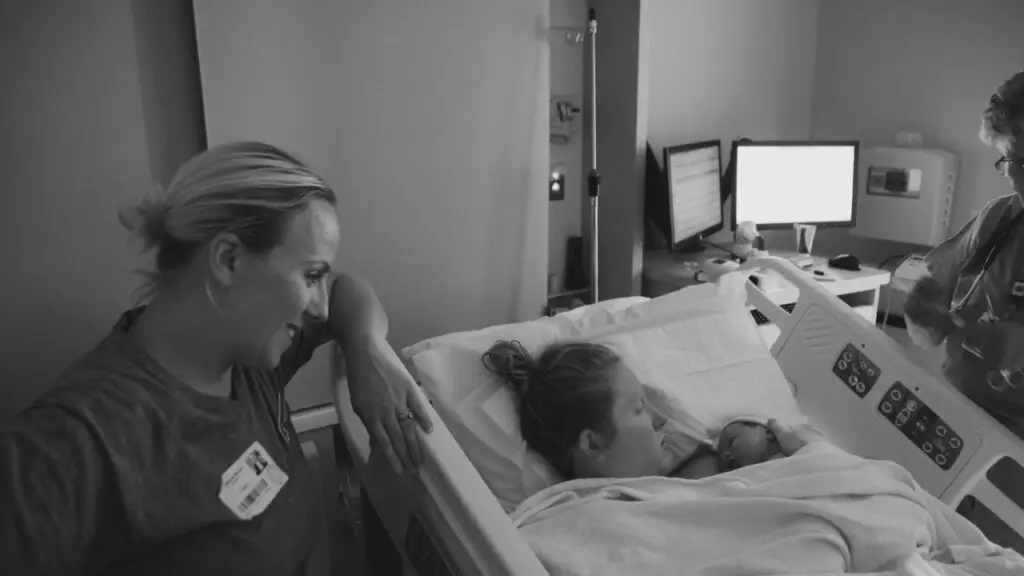
This is a big part of why continuous support during labor makes such a difference. A Cochrane review on continuous support during childbirth found it was linked with shorter labors and fewer negative feelings about the birth experience. That’s the heart of what we do as birth doulas: helping protect the space so you can feel safe enough to let go.
This one might resonate with a lot of you. So often, the feeling of the birth space comes down to who’s in it.
Who you invite in is your choice, every time. We love anyone you want there. But we do ask our clients to think honestly about one thing: will it feel like you’re on a timeline? Having people waiting outside the door, or even hanging out in the waiting room, can make labor feel a little performative for some people. That pressure can be hard to recognize in advance, and it can add to your anxiety in ways that change the whole environment.
A few options our clients find helpful:
That last one matters a lot. Maybe you’re sure you’ll want your mom in the room. Then labor day comes, and for whatever reason, the energy isn’t right. Talk with your people beforehand: “If I change my mind, it’s no offense. I need you to be flexible.” Then nobody has expectations or guarantees, and everyone can respect your wishes.
We want to be clear here. We’re not asking you to walk in blind and see what happens. We want you educated. We want you to feel empowered. We want you making the decisions.
Then, once your environment is set and your birth team is in place, there comes a point where you feel allowed to surrender. That’s very different from just going with the flow.
As Nikki puts it, being able to surrender means deeply caring about your experience and understanding that you can’t control everything. You care deeply. You feel safe enough to let your body do the work. Both things are true at once.
You don’t have to do all of this at once. Pick what feels doable:
Start by naming what scares you instead of pushing it away. Then pair that fear with education about how labor works, a few affirmations that speak to you, and a support team that knows your plan. You don’t have to become fearless. The goal is having tools to come back to safety when fear shows up.
The best ones are the ones that mean something to you. Short phrases tied to your breath work well, like “inhale strength, exhale fear” or “one contraction at a time.” Some moms pull from their faith or sports background. Share them with your team so they can remind you in the moment.
Not at all. Surrender doesn’t mean giving up your voice, your preferences, or your options. It means staying flexible and present, trusting yourself one moment at a time, while still asking questions and making decisions that feel right for you.
Research suggests fear and stress can play a role. One large study found that women with significant fear of childbirth had somewhat longer labors on average. Feeling safe, supported, and informed can help your body do its work, which is why mental prep is such a meaningful part of getting ready.
Whoever helps you feel safe and calm. It’s your choice. Think about whether having certain people present, or waiting nearby, might make you feel rushed. And talk with everyone ahead of time about the possibility that you’ll change your mind.
We asked each other at the end of the episode: if you could tell a pregnant mom just one thing about mentally preparing for labor, what would it be?
Nikki’s answer: you don’t have to know exactly how your birth is going to unfold. You get to feel everything you feel. Prepare, ask questions, stay curious, and build your support system now. Then when labor comes, give yourself permission to let your body do the work. You’re not giving up control. You’re learning to trust yourself through something you haven’t experienced before.
And this lesson reaches far past labor day. Learning to surrender can shape how you grow as a parent and as a person, in more ways than you’d expect.
Want to hear the full conversation? Listen to Mom2Mom: How to Mentally Prepare for Labor: What Surrender Really Means. And if you’d love to have someone in your corner helping you prepare, we’d be honored to talk with you about birth doula support.
Birth doesn’t have to go perfectly for you to feel strong, empowered, and supported. We’re right here with you.
Any/all of the links in this blog may be affiliate links of which How 2 Mom, LLC receives a small commission, without any additional cost to you. Using affiliate links help us maintain our website, continue to provide for our community, and support our families, and we are forever grateful for your support!