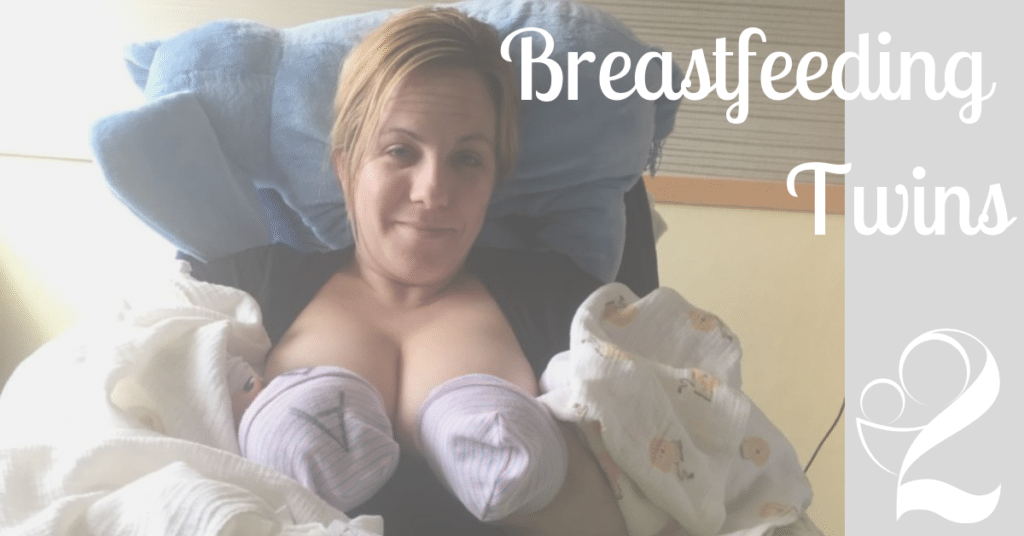



If your first feeling when you found out you were having twins was fear, we want you to know that is so normal. Breastfeeding twins is one of those experiences that can look completely different depending on the day, the baby, and the season you are in. There is no single right way to do it, and no two journeys, even within the same family, look exactly alike.
In this post, we are sharing the story of Andrea Stanton, a How2Mom client and mom of three, who breastfed her twin boys after they arrived at 33 weeks and spent seven weeks in the NICU. Stephanie sat down with her on the Mom2Mom podcast to talk through the early days, the pain nobody warns you about, and the moment things finally clicked. By the end of this post, you will have a clearer picture of what breastfeeding twins can look like in real life, along with a few places to turn if you want extra support along the way.
When Andrea’s twin boys, Charlie and Elliot, were born at 33 weeks, they were not able to nurse right away. Both babies had feeding tubes at first, so their milk went straight to their bellies while their bodies caught up. This can feel disorienting. You imagine skin to skin and a baby at the breast, and instead you are standing at an isolette, watching monitors, and wondering when any of this will feel like the picture you had in your head.
Here is what we want you to hear. In those early days, the most important thing you can do is often the quietest one. Andrea pumped every two and a half to three hours to build her supply, even before her babies could nurse. She used that time to let her body heal from birth while still working toward her breastfeeding goals. It was not glamorous, and it did not look like the photos online, but it mattered.
As the twins grew stronger, Andrea and her care team moved slowly into nursing, starting with short stretches at the breast just to practice. Their oxygen monitors would sometimes dip during those early attempts, which understandably raised her anxiety. This is a good reminder that a NICU breastfeeding journey rarely moves in a straight line. It can start, pause, and start again, and that rhythm does not mean something is wrong.
Triple feeding means nursing, then bottle feeding, then pumping, all within the same feeding window, over and over around the clock. Stephanie experienced this firsthand with her own three babies and describes those first weeks as survival mode. If you are in the middle of triple feeding newborn twins right now, we want to normalize how hard this stretch can feel.
What we are seeing again and again with families we support is that triple feeding is usually temporary. It exists to solve a specific problem, often building supply or helping a baby learn to transfer milk efficiently. It is not a life sentence. Here are a few things that can help while you are in it:
If you are shopping for tandem nursing twins gear, you will hear a lot of opinions about nursing pillows. Andrea and Stephanie both tried the popular firm, wide pillow that many twin moms recommend and found it was not their favorite. They both preferred a softer, more flexible pillow that let them angle each baby individually and that continued to be useful as the twins got older and could sit up in it.
The answer here is that there is no universally right pillow. What works depends on your torso, your babies’ size, and how you like to sit while feeding. If a product everyone raves about is not working for you, that does not mean you are doing something wrong. It might just mean your body needs a different tool.
This is the part of breastfeeding twins that people talk about the least, and it deserves more airtime. Some discomfort while your body adjusts to nursing is common, especially in the first couple of weeks. But pain that is sharp, constant, or getting worse is a different story, and it deserves attention.
Andrea shared that with her first baby, she did not realize how much damage was happening until she developed a high fever and was later diagnosed with mastitis, an inflammation of breast tissue that can involve infection and often shows up as pain, swelling, redness, or a fever, according to Mayo Clinic. She did not yet know what a normal amount of discomfort looked like compared to a sign that something needed help.
With her twins, Andrea did things differently. She stayed consistent with nipple care between feeds and paid closer attention to what her body was telling her. Stephanie shared a similar experience of confusion, since one of her own twins was quietly causing more nipple damage than she realized, while she assumed it was the other baby entirely.
What can help if you are unsure whether what you are feeling is normal:

Both Andrea and Stephanie point to the same turning point in their stories: working with a lactation consultant. For Andrea, this looked like a NICU nurse who was also an IBCLC and offered to check in throughout her hospital stay. For Stephanie, it meant finally reaching out after weeks of trying to figure things out alone.
One tool that came up again and again in this conversation is the weighted feed, where a baby is weighed before and after nursing to see how much milk they actually transferred. For Andrea, this gave her real information instead of guesswork, and it eased a lot of her postpartum anxiety. For Stephanie, a weighted feed revealed that one of her twins was transferring far less milk than she realized, simply because of a shallow latch that was not visible from the outside.
If you are wondering whether your milk supply is enough, know that this worry is incredibly common and does not always mean there is a real problem, according to Cleveland Clinic. A lactation consultant can help you sort out what is actually happening and build a plan from there. This is exactly the kind of support our own lactation services are built around, whether you want an in person check in during a hard week or ongoing help figuring out a plan that works for your family. If you would rather start learning at your own pace before your babies arrive, our online lactation class walks through the basics so you feel less like you are starting from zero.
As Andrea’s twins grew, she moved away from feeding them both at every session and started alternating, nursing one twin per feeding except for a shared session in the morning. She also added a bottle at night, which gave her a full picture of how much they were eating and protected her own sleep. Her twins started sleeping through the night around five months.
This is the part of Andrea’s story that we think every twin mom needs to hear. Formula is not a dirty word. Donor milk is a gift, not a failure. Combo feeding, breast milk, donor milk, and formula together, can be exactly the version of breastfeeding that lets your family thrive. Protecting your own sleep and your own mental health is not separate from feeding your babies well. It is part of the same picture.
If postpartum anxiety or exhaustion is part of your story right now, please know that support exists beyond feeding help too. Our postpartum doula services are built to help you rest, recover, and feel like yourself again while someone else holds a few of the pieces.
Some tenderness as your body adjusts is common, especially in the first couple of weeks. Pain that is sharp, constant, or getting worse is worth checking with a lactation consultant, since it can point to a latch issue or early signs of mastitis.
Many moms do, though the timeline often looks different than expected. Andrea's twins needed feeding tubes at first and gradually moved to nursing over several weeks. Support from a lactation consultant familiar with premature babies can make a real difference here.
Tandem feeding means nursing both twins at the same time, one on each breast. It can save time, but it is not required. Plenty of moms prefer feeding one twin at a time, especially for the one on one connection.
Watching diaper counts, weight gain, and audible swallowing can help, but the most reliable way to know is often a weighted feed with a lactation consultant, which shows exactly how much milk your baby transferred during a real feed.
Yes. Combo feeding, using breast milk alongside formula or donor milk, is a common and completely valid way to feed twins, especially when it protects your sleep, your mental health, and your ability to keep showing up for your babies.
If this episode and this post feel familiar, we want you to know that your feeding journey does not have to look like anyone else’s to be a good one. Whether that means nursing, pumping, combo feeding, or a combination that shifts week to week, what matters most is that you and your babies are supported along the way.
Listen to the full conversation between Stephanie and Andrea on the Mom2Mom podcast for even more of her story, including the advice she would give any twin mom just starting out. And if you want extra support with your own feeding journey, our lactation services and online lactation class are both here whenever you are ready.
Any/all of the links in this blog may be affiliate links of which How 2 Mom, LLC receives a small commission, without any additional cost to you. Using affiliate links help us maintain our website, continue to provide for our community, and support our families, and we are forever grateful for your support!
Breastfeeding can be challenging, but with the right guidance, you can thrive. Our Online Lactation Course will allow you to empower yourself with knowledge and embrace this new chapter with confidence. Enroll in our Online Lactation Course today!

Tandem feeding is nursing both twins on each breast at the same time. Some moms love efficiency. Andrea told Stephanie that the very first time she tried it, she felt like a total badass, and that feeling is real and worth celebrating. At the same time, she found that as her boys grew, she preferred nursing them one at a time, partly for the connection and partly because two active babies on two sides can turn into a wrestling match fast.
Stephanie had a similar experience with her own twins. Tandem feeding was efficient, but it also came with its own kind of stress, especially when the babies were too small to hold their position on their own. If one baby lost their latch, getting them back on with a newborn’s limited neck strength was its own project.
Here is what can help as you figure out your own preference:
If you are shopping for tandem nursing twins gear, you will hear a lot of opinions about nursing pillows. Andrea and Stephanie both tried the popular firm, wide pillow that many twin moms recommend and found it was not their favorite. They both preferred a softer, more flexible pillow that let them angle each baby individually and that continued to be useful as the twins got older and could sit up in it.
The answer here is that there is no universally right pillow. What works depends on your torso, your babies’ size, and how you like to sit while feeding. If a product everyone raves about is not working for you, that does not mean you are doing something wrong. It might just mean your body needs a different tool.
This is the part of breastfeeding twins that people talk about the least, and it deserves more airtime. Some discomfort while your body adjusts to nursing is common, especially in the first couple of weeks. But pain that is sharp, constant, or getting worse is a different story, and it deserves attention.
Andrea shared that with her first baby, she did not realize how much damage was happening until she developed a high fever and was later diagnosed with mastitis, an inflammation of breast tissue that can involve infection and often shows up as pain, swelling, redness, or a fever, according to Mayo Clinic. She did not yet know what a normal amount of discomfort looked like compared to a sign that something needed help.
With her twins, Andrea did things differently. She stayed consistent with nipple care between feeds and paid closer attention to what her body was telling her. Stephanie shared a similar experience of confusion, since one of her own twins was quietly causing more nipple damage than she realized, while she assumed it was the other baby entirely.
What can help if you are unsure whether what you are feeling is normal:
Both Andrea and Stephanie point to the same turning point in their stories: working with a lactation consultant. For Andrea, this looked like a NICU nurse who was also an IBCLC and offered to check in throughout her hospital stay. For Stephanie, it meant finally reaching out after weeks of trying to figure things out alone.
One tool that came up again and again in this conversation is the weighted feed, where a baby is weighed before and after nursing to see how much milk they actually transferred. For Andrea, this gave her real information instead of guesswork, and it eased a lot of her postpartum anxiety. For Stephanie, a weighted feed revealed that one of her twins was transferring far less milk than she realized, simply because of a shallow latch that was not visible from the outside.
If you are wondering whether your milk supply is enough, know that this worry is incredibly common and does not always mean there is a real problem, according to Cleveland Clinic. A lactation consultant can help you sort out what is actually happening and build a plan from there. This is exactly the kind of support our own lactation services are built around, whether you want an in person check in during a hard week or ongoing help figuring out a plan that works for your family. If you would rather start learning at your own pace before your babies arrive, our online lactation class walks through the basics so you feel less like you are starting from zero.
As Andrea’s twins grew, she moved away from feeding them both at every session and started alternating, nursing one twin per feeding except for a shared session in the morning. She also added a bottle at night, which gave her a full picture of how much they were eating and protected her own sleep. Her twins started sleeping through the night around five months.
This is the part of Andrea’s story that we think every twin mom needs to hear. Formula is not a dirty word. Donor milk is a gift, not a failure. Combo feeding, breast milk, donor milk, and formula together, can be exactly the version of breastfeeding that lets your family thrive. Protecting your own sleep and your own mental health is not separate from feeding your babies well. It is part of the same picture.
If postpartum anxiety or exhaustion is part of your story right now, please know that support exists beyond feeding help too. Our postpartum doula services are built to help you rest, recover, and feel like yourself again while someone else holds a few of the pieces.
Some tenderness as your body adjusts is common, especially in the first couple of weeks. Pain that is sharp, constant, or getting worse is worth checking with a lactation consultant, since it can point to a latch issue or early signs of mastitis.
Many moms do, though the timeline often looks different than expected. Andrea's twins needed feeding tubes at first and gradually moved to nursing over several weeks. Support from a lactation consultant familiar with premature babies can make a real difference here.
Tandem feeding means nursing both twins at the same time, one on each breast. It can save time, but it is not required. Plenty of moms prefer feeding one twin at a time, especially for the one on one connection.
Watching diaper counts, weight gain, and audible swallowing can help, but the most reliable way to know is often a weighted feed with a lactation consultant, which shows exactly how much milk your baby transferred during a real feed.
Yes. Combo feeding, using breast milk alongside formula or donor milk, is a common and completely valid way to feed twins, especially when it protects your sleep, your mental health, and your ability to keep showing up for your babies.
If this episode and this post feel familiar, we want you to know that your feeding journey does not have to look like anyone else’s to be a good one. Whether that means nursing, pumping, combo feeding, or a combination that shifts week to week, what matters most is that you and your babies are supported along the way.
Listen to the full conversation between Stephanie and Andrea on the Mom2Mom podcast for even more of her story, including the advice she would give any twin mom just starting out. And if you want extra support with your own feeding journey, our lactation services and online lactation class are both here whenever you are ready.
Any/all of the links in this blog may be affiliate links of which How 2 Mom, LLC receives a small commission, without any additional cost to you. Using affiliate links help us maintain our website, continue to provide for our community, and support our families, and we are forever grateful for your support!