If you’ve taken a childbirth class, followed pelvic floor therapy content, or spent time on birth-prep social media, you’ve probably heard some version of this advice:
“Don’t hold your breath while pushing.” “You should breathe your baby out.”
And while that guidance often comes from a place of protecting the pelvic floor, it can leave a lot of birthing people confused—especially when labor doesn’t unfold the way they expected.
In this episode of the Mom2Mom Podcast, we wanted to slow the conversation down and add nuance. Not debate. Not opposition. Just clarity.
Because when it comes to breathing techniques for labor, context matters. Timing matters. And real-time support matters.
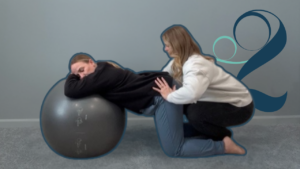
43 | Breathing Your Baby Out: What No One Tells You About the Pushing Phase of Labor
Why This Conversation Needs More Nuance
We want to be very clear from the start: We deeply respect and work with many pelvic floor therapists.
We collaborate with them. We refer to them. We learn from them.
Pelvic floor therapists are experts in muscle function, rehabilitation, and long-term pelvic health.
At the same time, doulas attend births for a living. We see pushing unfold in real time, across different bodies, babies, positions, and birth settings—every single day.
This episode isn’t about who’s “right.” It’s about scope, collaboration, and making sure families receive guidance that actually helps in the moment of birth.
The Common Advice: "Don't Hold Your Breath"
One of the most common messages around breathing techniques for labor—especially during pushing—is that breath holding should be avoided. And we understand where that advice comes from. It’s often rooted in:
Protecting the pelvic floor
Reducing strain or injury
Supporting long-term recovery
The challenge arises when that advice is presented as a hard rule, without context, and applied to every stage of pushing for every body. As we shared in the episode, “The challenge comes when that advice is given without context—or presented as a hard rule for all births and all pushing stages.”
What We See During Real Births
Here’s where attending births matters. Before a baby has moved under the pelvis—before descent, rotation, and engagement—many birthing people need to push with significant intention. For a lot of bodies, that includes:
Strong bearing down
Brief breath holding
Focused, powerful pushes
That doesn’t mean something is going wrong. Often, it means the body is doing exactly what it needs to do to move the baby into a position where gentler, slower, more controlled pushing can happen. As we said in the episode, “For a lot of bodies, that includes brief breath holding and strong bearing down.”
Breath Holding Is A Tool, Not A Rule
This is the heart of the conversation. We are not advocating for prolonged, coached, purple pushing across the board. We are advocating for flexibility. Breath holding can be a useful tool early in pushing for some people—especially when the baby still needs to descend and rotate. Once that happens, we often see a natural shift:
Slower pushes
Shorter breath holds
More controlled breathing
Less force
As one host shared, “Once baby has descended or crowned, that’s often when we see real benefit in shifting to slower, shorter, more controlled pushes with less breath holding.” Different stages call for different strategies.
Feel Confident & Prepared for Birth!
Join How 2 Mom’s childbirth education class—available online or in-person in the Twin Cities!
✔ Expert guidance from experienced birth professionals
✔ Flexible learning – self-paced online or hands-on in-person
✔ Comprehensive prep – labor stages, pain management & postpartum care
Take the stress out of birth prep and feel empowered every step of the way.
Where we see issues arise is when prenatal advice turns into rigid rules. If someone enters labor believing, “I must not hold my breath under any circumstances,” it can lead to:
Ineffective pushing
Hesitation
Fear of “doing it wrong”
In some cases, that rigidity contributes to stalled progress and increased intervention—not because the body can’t birth, but because the person doesn’t feel free to respond instinctively. Birth requires responsiveness, not perfection.
Why Scope And Collaboration Matter In Birth Education
Pelvic floor therapists are not present at births. That’s not a criticism—it’s simply a fact of scope and setting. Their guidance is incredibly valuable before birth and during postpartum recovery. But real-time labor decisions benefit from professionals who:
Attend births regularly
See pushing unfold moment by moment
Can adjust guidance based on what’s happening right now
The best outcomes happen when professionals stay in their lanes—and refer out when another perspective is needed. Families don’t need one person doing everything. They need a team.
What We'd Love Families To Hear Instead
Instead of blanket statements, we’d love to hear more language like:
“Here are different breathing and pushing styles.” “Here’s when each might be helpful.” “And here’s who can support you in real time during labor.”
That kind of education empowers—not limits.
Breathing Techniques and Takeaways For Birthing People
Breathing techniques for labor are not one-size-fits-all
Breath holding can be a useful tool in certain stages
Gentler breathing often becomes helpful later in pushing
Rigid rules can interfere with instinctive pushing
Real-time support helps guide what your body needs
Frequently Asked Questions
Can You Really Breathe Your Baby Out?
Sometimes—but not always. Some people naturally breathe their baby down, especially later in pushing. Others need stronger bearing down first. Both can be normal.
Is It Bad To Hold Your Breath While Pushing?
Brief breath holding can be appropriate and effective in certain stages of labor. Prolonged, forced breath holding without guidance may not be helpful, but flexibility matters.
Who Should Guide Breathing And Pushing During Labor?
Real-time labor support—from providers and doulas who are present at birth—can help guide breathing and pushing moment by moment, based on what’s actually happening.
Bringing It Back To The Mom2Mom Mission
Our goal isn’t perfect pushing. It’s empowered, informed birthing people. People who trust their bodies. People who understand their options. People who know it’s okay to adjust in the moment. There is no single “right” breathing technique for labor. Only the technique that works for that body, that baby, and that moment.
We are experts in all things birth and postpartum. We are more than doulas - we are your centralized place for informed education and support for your journey of motherhood.
Our premier doula agency in the Twin Cities specializes in Birth Doula Services, Postpartum Doula Services, Placenta Encapsulation, and Lactation Counseling and MORE including on demand courses.
Any/all of the links in this blog may be affiliate links of which How 2 Mom, LLC receives a small commission, without any additional cost to you. Using affiliate links help us maintain our website, continue to provide for our community, and support our families, and we are forever grateful for your support!