Most moms come into our office at the Wellery with a pretty solid birth prep list. Hospital bag packed. Birth plan written. Snacks chosen with great care.
Nervous system? Usually not on the list.
That’s the one we want to talk about.
Because after working with pregnant and postpartum moms for years, the thing that keeps showing up is this: what happens in a woman’s nervous system during labor shapes her experience just as much as what’s happening physically. Sometimes more. And most birth prep skips right over it.
So let’s not do that.
Understanding the Nervous System in Labor
Your nervous system has two primary modes that are especially important during labor:
Sympathetic Nervous System (Fight or Flight)
This is the state your body enters when you feel stressed, scared, tense, or unsafe. In this state, your body releases adrenaline. While this is helpful if you need to run from danger, it can actually slow or stall labor, increase pain perception, and make it harder for your body to relax.
Parasympathetic Nervous System (Rest, Digest, and Birth)
This is the state where your body can relax, your muscles can soften, and your body can produce oxytocin—the hormone responsible for contractions and labor progression. This is the state we want the body in during labor.
This is why you may hear birth professionals say things like:
“Dim the lights”
“Keep the room calm”
“Help mom feel safe and relaxed”
These are not just comfort measures—they are biological support for labor.
What We Actually See in Practice
We’re chiropractors. That means we’re always looking at the spine and the nervous system together, because you can’t really separate them.
What we see a lot in the moms who come to us is a body that has been bracing for a long time. Pregnancy is physically demanding in ways people underestimate. Add in stress, disrupted sleep, and the particular kind of anxiety that comes with approaching a birth you can’t fully plan for, and many women are already running at a high sympathetic level before labor even starts.
That matters. A nervous system that has been in a stress response for weeks or months doesn’t just flip off when contractions begin.
Prenatal chiropractic care is one way we work with that. Supporting pelvic alignment, reducing the tension the body holds through the hips and lower back, helping the nervous system regulate rather than brace. It’s not magic. But a body carrying less physical tension going into labor tends to adapt more easily once things get moving.
It’s one piece. There are others.
Feel Confident & Prepared for Birth!
Join How 2 Mom’s childbirth education class—available online or in-person in the Twin Cities!
✔ Expert guidance from experienced birth professionals
✔ Flexible learning – self-paced online or hands-on in-person
✔ Comprehensive prep – labor stages, pain management & postpartum care
Take the stress out of birth prep and feel empowered every step of the way.
When a laboring mother feels safe, supported, and calm, her body is more likely to:
Produce oxytocin
Have effective, productive contractions
Experience less tension and fear
Allow labor to progress more smoothly
When a mother feels scared, watched, tense, or out of control, the body may release adrenaline, which can:
Slow contractions
Stall dilation
Increase pain and tension
Make labor feel harder and longer
This is not in her head—this is how the body is designed.
How to Calm Your Nervous System in Labor
These are the things we actually talk through with clients. Some are practical. Some feel almost too simple. They work anyway.
Breathing, and specifically the exhale.
Long, slow exhales are one of the fastest ways to shift the nervous system toward parasympathetic. The inhale is activating. The exhale is regulating. Practicing this before labor isn’t just about learning a technique. It’s about making it automatic so your body can find it when things get hard.
Your environment matters more than you think.
A familiar pillow. A playlist you put together. Lights turned down. Fewer people in the room than you thought you needed. The nervous system is constantly scanning its surroundings asking whether it’s safe. Small environmental choices send real signals.
Movement and touch.
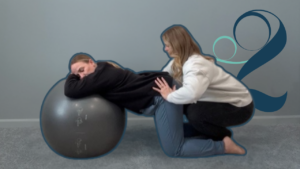
Swaying, position changes, a hand on the lower back, counterpressure during a contraction. These aren’t just pain management tools. They give the nervous system somewhere to go with intensity and help the body stay regulated rather than locked.
Feeling like you know what's happening.
One of the most dysregulating things in labor is the sense that things are being done to you without explanation. Moms who feel informed and included in decisions about their care tend to feel safer, and that safety shows up in how their bodies respond.
Your support team.
This one starts way before labor day. Knowing your care provider. Having a doula present for continuous support. A partner who’s been prepared rather than just present. Research on continuous labor support is some of the strongest we have in birth outcomes, and a lot of why it works comes back to exactly this: the nervous system labors better when it doesn’t feel alone.
This Work Starts During Pregnancy, Not in the Labor Room
We say this gently but pretty consistently: third trimester is not too early to start thinking about nervous system preparation. Second trimester is better. First trimester, if you can.
Not because birth is something to be afraid of and you need that much time to manage the fear. But because the capacity to regulate under pressure is something you build gradually. It doesn’t show up on demand if you’ve never practiced it.
Some of what we find makes the most difference: Regular chiropractic care through the third trimester. Childbirth education that actually explains what is happening in your body, not just the sequence of events to expect. A consistent breathing or relaxation practice, even five minutes a day. And honest conversations about fear, about previous birth experiences, about anything that feels unresolved.
The nervous system is always asking one question. Am I safe? The whole point of birth preparation, from our perspective, is building as many honest answers to that question as possible.
Frequently Asked Questions
Why does fear make labor harder?
When the body perceives fear, it releases adrenaline. Adrenaline and oxytocin essentially work against each other. Since oxytocin is what drives labor progression, a body flooded with adrenaline may slow down, stall, or produce contractions that feel more intense but accomplish less. This is sometimes called the fear tension pain cycle. It’s real, it’s physiological, and it’s worth preparing for.
What if I'm just an anxious person and nothing seems to help?
Anxiety before birth is genuinely common. The goal isn’t to feel nothing. It’s to have enough tools that your nervous system can come back to regulated when things get intense, even if it spikes first. If anxiety feels significant or has been present throughout pregnancy, working with a perinatal therapist alongside physical support can make a real difference.
How does a doula support the nervous system specifically?
Continuous presence, physical touch, calm and consistent reassurance, and advocacy all send safety signals to the nervous system. It’s not just emotional support. It’s biological. TheCochrane review on continuous labor support is one of the most cited in birth research for good reason.
When should I actually start preparing?
Now. Whenever now is. There’s no perfect window, but earlier gives you more time to build the capacity rather than cram it. If you’re in your third trimester reading this, start today. It’s not too late.
We're in this with You
Birth is one of the most significant things a body will ever do. It deserves preparation that goes deeper than a bag and a plan.
When moms understand how to calm their nervous system in labor and start building that capacity before birth, something shifts. They feel more grounded going in. More like a participant in their own story rather than a passenger in it.
That’s what we care about at The Wellery.
If you’re in the Maple Grove area and want to talk through how prenatal chiropractic might support your birth preparation, we’d love to connect. Visitthewellerymn.com to learn more.
And for more honest, grounded conversations about birth and motherhood, the Mom2Mom Podcast is a good place to keep listening.
This post was written by the team atThe Wellery, a modern chiropractic practice supporting whole family wellness in Maple Grove, Minnesota.
Thank you for Being Here!
Meet How2Mom
We are experts in all things birth and postpartum. We are more than doulas - we are your centralized place for informed education and support for your journey of motherhood.
Our premier doula agency in the Twin Cities specializes in Birth Doula Services, Postpartum Doula Services, Placenta Encapsulation, and Lactation Counseling and MORE including on demand courses.
Any/all of the links in this blog may be affiliate links of which How 2 Mom, LLC receives a small commission, without any additional cost to you. Using affiliate links help us maintain our website, continue to provide for our community, and support our families, and we are forever grateful for your support!