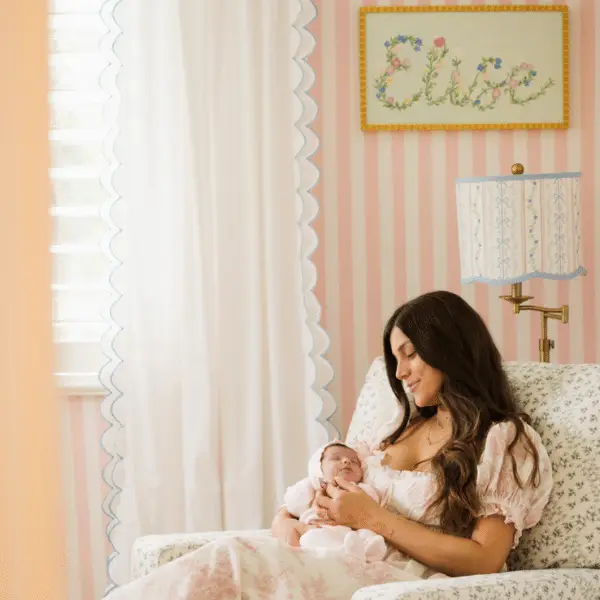
How to Design a Nursery That Supports Rest (For Baby and You)

Nursery Room

The Art of Designing a Restful Nursery

If you’ve ever found yourself scrolling through Pinterest at midnight with 47 nursery boards saved, a registry list a mile long, and absolutely no idea where to begin – you are not alone!

Designing a nursery can feel surprisingly overwhelming. There are endless opinions, endless products, and endless images of perfectly styled rooms that somehow make you feel behind before you’ve even started. 

The truth? A nursery doesn’t need to be perfect. It needs to feel calm.

When you’re preparing for a new baby, it’s easy to focus on what the room will look like. But the most successful nurseries aren’t just beautiful-they support rest, recovery, and daily life for both baby and parents. Today we’re breaking down how to design a nursery that actually supports sleep, comfort, and connection from those first newborn days and beyond.

Why Nursery Design Matters More Than You Think

When considering how to design a nursery, it’s important to remember that this room serves two people: your baby and the parent spending countless hours caring for them.

The environment around us directly impacts our nervous systems. Soft lighting, soothing colors, comfortable seating, and reduced visual clutter can help create a sense of calm during a season that often feels anything but calm.

For babies, a thoughtfully designed nursery can support healthy sleep habits and reduce overstimulation. For parents, especially during the postpartum period, it can become a retreat during long nights, early mornings, and endless feeding sessions.

The goal isn’t perfection. The goal is creating a space that feels supportive.

Start With Calming Nursery Colors

One of the simplest ways to create a restful nursery is through color.

Research consistently shows that color influences mood and energy levels. While babies don’t perceive color exactly as adults do, the overall atmosphere of a room can contribute to a sense of calm for everyone using it.

Building a Nursery Color Palette That Encourages Rest

When selecting nursery colors, think beyond the wall paint. The most calming nurseries are layered with a thoughtful palette that feels cohesive, soft, and restful from floor to ceiling.

Start with a foundational color such as a soft warm white, creamy neutral, muted sage green, dusty blue-green, warm taupe, gentle greige, or earthy clay-inspired neutral. These colors create a soothing backdrop without feeling sterile or overly trendy, allowing the room to grow alongside your child.

Once you’ve chosen your primary color, introduce secondary palette colors through textiles, artwork, window treatments, and accessories. Layering complementary tones creates depth and interest while maintaining a peaceful atmosphere.

For a nursery anchored in warm whites or creamy neutrals, consider adding:

  • Soft oatmeal and flax tones
  • Dusty blush pink
  • Muted terracotta
  • Natural wood finishes
  • Warm brass accents

If you’re drawn to sage greens, pair them with:

  • Warm ivory
  • Soft camel
  • Dusty blue
  • Natural oak
  • Muted mustard accents

For dusty blue-green nurseries, complementary colors might include:

  • Sandy beige
  • Warm gray
  • Soft olive
  • Weathered wood tones
  • Subtle touches of rust or clay

Warm taupes and greige tones pair beautifully with:

  • Creamy whites
  • Soft mushroom shades
  • Muted olive greens
  • Pale blue-grays
  • Rich natural textures such as linen, rattan, and wood

For earthy clay-inspired palettes, balance the warmth with:

  • Soft ivory
  • Sage green
  • Dusty rose
  • Warm wood tones
  • Textural natural fibers

The goal is to create gentle contrast rather than dramatic color shifts. A nursery should feel visually quiet—a space where your eyes and nervous system can relax after a long day. Instead of incorporating several bold colors, choose two or three complementary hues and repeat them throughout the room. This creates a layered, collected look that feels timeless, calming, and intentionally designed for rest.

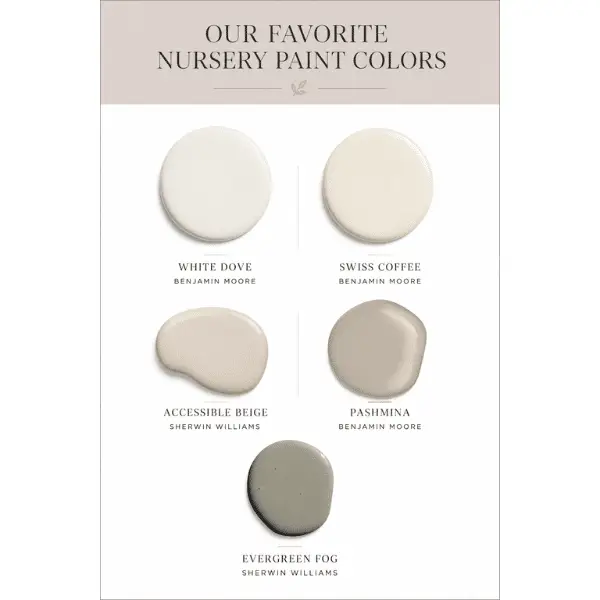
Nursery Wall Colors for Sleep

Some of my designer favorites include:

  • Benjamin Moore Swiss Coffee
  • Benjamin Moore White Dove
  • Benjamin Moore Pashmina
  • Sherwin-Williams Accessible Beige
  • Sherwin-Williams Evergreen Fog
Nursery Colors

What Colors to Avoid

You don’t need to fear color, but highly saturated neon shades or intense contrasts can create a more stimulating environment. Instead, opt for softer, muted versions of your favorite hues.

A practical designer tip: always test paint swatches on multiple walls and observe them throughout the day. Natural light can dramatically change how a color feels in a space.

Feel Confident Caring for Your Newborn!

Bringing your baby home is exciting—but it can also feel overwhelming. Our Newborn Care Class gives you the knowledge and confidence to care for your little one from day one.

Safe sleep & soothing techniques to help your baby rest peacefully
Diapering, bathing & feeding essentials for stress-free newborn care
Car seat safety & expert guidance to keep your baby secure

Feel prepared, supported, and confident in your parenting journey.

Soothing Nursery Ideas That Go Beyond Aesthetics

As designers, we often talk about creating homes that support the way people actually live. Nowhere is that more important than in a nursery. Every decision should answer the question: “Will this make life easier when we’re tired?”

Thoughtful lighting, proper storage, accessible organization, temperature control, and comfortable seating may not be the first details guests notice, but they are often the features parents appreciate most once the baby arrives.

The best nursery designs strike a balance between beauty and practicality. They feel warm and welcoming without being cluttered. They photograph beautifully, but more importantly, they function beautifully. Because when you’re navigating sleepless nights and learning new routines, a well-designed nursery doesn’t just look good—it actively supports your family’s well-being..

Layer Your Lighting

Lighting plays a major role in a nursery sleep environment.

Ideally, include:

  • An overhead fixture for daytime tasks
  • A table lamp or floor lamp for nighttime feeds
  • A dimmable light source whenever possible

Soft lighting helps maintain a calm atmosphere during overnight wake-ups while reducing disruption to everyone’s sleep cycles.

Don't Overlook Window Treatments

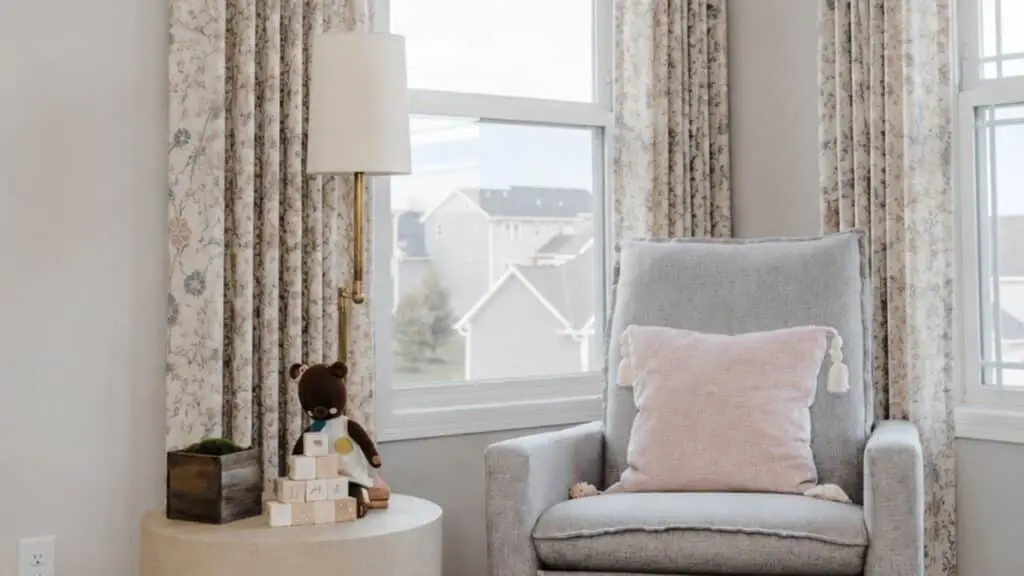
Few design elements work harder in a nursery than window treatments. While they often get selected near the end of a project, they have a significant impact on both the function and feel of the room.

For clients who want a nursery that feels elevated, timeless, and restful, I almost always recommend pinch pleat drapery. Unlike standard curtain panels, pinch pleat drapes create a tailored, structured look that instantly makes a room feel more polished and thoughtfully designed. The soft, consistent folds add texture and softness while helping frame the architecture of the space.

Beyond aesthetics, drapery plays an important role in creating an ideal nursery sleep environment. Pairing decorative pinch pleat panels with blackout lining allows you to maintain a beautiful design while also controlling light during naps and early bedtimes. A darkened room can help support more consistent sleep patterns and reduce overstimulation during daytime rest periods.

One of the most common mistakes I see is hanging curtain rods directly above the window frame. Doing so can make ceilings feel lower and windows appear smaller than they actually are.

Instead, hang your drapery rod as high as possible—typically 8 to 12 inches above the window trim, or even just below the ceiling if the room allows. This simple adjustment draws the eye upward and creates the illusion of taller ceilings.

Width matters just as much. Extend the rod 8 to 12 inches beyond each side of the window whenever possible. This allows the drapery panels to stack mostly off the glass when open, maximizing natural light during the day while making the window appear larger and more substantial.

The result is a room that feels brighter, taller, and more luxurious.

When selecting fabrics, lean toward natural-looking materials such as linen blends, cotton, or textured woven fabrics in calming neutral tones. These materials soften the room visually and contribute to the layered, collected feeling that makes a nursery feel welcoming rather than overly themed.

Like many of the best nursery design decisions, well-executed drapery is something you may not consciously notice every day. But it quietly contributes to the overall sense of calm, comfort, and refinement that makes the room feel special. It’s a perfect example of design doing what it does best: supporting both beauty and function simultaneously.
Mom in Nursery

Ready to Create a Nursery That Feels as Good as It Looks?

Designing a nursery is about more than choosing paint colors and furniture. It’s about creating a space that supports your family’s daily routines, encourages rest, and helps you navigate one of life’s biggest transitions with a little more ease and a lot more beauty.

Whether you’re starting with an empty room, refreshing an existing space, or planning for a growing family, thoughtful design can transform a nursery into a retreat that serves both baby and parents.

At Carriage House Studio, we specialize in creating timeless, family-friendly interiors that balance beauty and functionality. From selecting calming color palettes and custom window treatments to sourcing furnishings and creating cohesive designs, we’re here to help bring your vision to life.

If you’re ready to create a nursery that feels calm, comfortable, and uniquely yours, we’d love to help.

Contact Carriage House Studio today to schedule a consultation and begin designing a nursery that supports rest, recovery, and the moments that matter most.

Thank you for Being Here!

Meet How2Mom

We are experts in all things birth and postpartum. We are more than doulas - we are your centralized place for informed education and support for your journey of motherhood.

How2Mom Services

Our premier doula agency in the Twin Cities specializes in Birth Doula Services, Postpartum Doula Services, Placenta Encapsulation, and Lactation Counseling and MORE including on demand courses.

Pin This Blog

Nursery Pin

Any/all of the links in this blog may be affiliate links of which How 2 Mom, LLC receives a small commission, without any additional cost to you. Using affiliate links help us maintain our website, continue to provide for our community, and support our families, and we are forever grateful for your support! 

Leave a Reply