

If you’ve hit 37 weeks and found yourself deep in a TikTok rabbit hole about eating dates or walking for hours to get labor going, you’re in good company. Everyone seems to have an opinion when a due date gets close. A friend swears by spicy food. Your aunt insists on raspberry leaf tea. And somehow, every story ends with “and it totally worked.”
Here’s what we know after supporting hundreds of families through labor: there isn’t one magic thing. But there are real, tangible ways to support your body during labor so it can do what it’s designed to do. And there are things that tend to work against it, too.
In this post, we’re breaking down the natural ways to progress labor that we see make a genuine difference in the birth room, along with a grounded look at the popular hacks the internet loves. What you won’t find here is a guarantee, because labor doesn’t work that way. What you will find is practical, evidence-informed guidance that gives your body the best chance to work with itself.
YES! We say this in almost every birth we support: body moving equals baby moving.
Movement in general, regardless of the specific position, helps labor progress in a few ways. When a mom stays active, the baby has a better chance of shifting and descending. The lower baby gets, the more pressure is applied to the cervix. That pressure is what drives dilation and effacement forward.
What we want to be clear about is that movement doesn’t have to be dramatic. You don’t need to be doing laps around the hospital floor for it to help. Small, intentional position changes matter just as much.
The goal isn’t exhausting yourself. It’s staying mobile and giving baby room to move.
If you’ve seen the peanut ball mentioned in birth prep content and wondered whether it’s worth including in your plan, the answer is yes, it can be a really helpful tool.
The peanut ball is a peanut-shaped exercise ball used to maintain a labor-friendly position while resting, especially when someone has an epidural and can’t change positions as easily on their own. It helps keep the pelvis open and encourages baby to descend even when a mom isn’t actively moving.
Research supports its use. A study published in the Journal of Perinatal Education found that laboring individuals who used a peanut ball had shorter first and second stages of labor and a lower rate of cesarean delivery compared to those who did not.
You can ask for a peanut ball at most hospitals, and your birth doula can help you use it correctly throughout labor so it stays in a position that actually supports baby’s movement. It’s a simple tool with a solid track record.
This is the part that surprises a lot of people. The most common thing we find ourselves saying to clients in early labor? Go rest. Eat something. Drink water. Not exactly the dramatic labor-accelerating advice everyone is searching for, but it matters more than almost anything else.
Here’s why. Your uterus is a muscle, and it is about to run a marathon. A dehydrated or underfueled muscle cannot work as efficiently as one that’s been taken care of. Early labor is your window to bank some energy and hydration before things intensify.
Your body will naturally stop wanting large amounts of food as labor progresses. That’s intentional. So take the opportunity to fuel early, because later on, it might be popsicles only.
And if you’re having what you think might be early contractions or a lot of Braxton Hicks activity, check your hydration first. Your uterus can contract from dehydration the same way any other muscle cramps when it’s dry.
Hey, expecting parents!
Are you looking for natural ways to manage labor discomfort? Then explore our Comfort Measures class for:
Take control of your birth experience and discover effective comfort techniques. Sign up for our comfort measures for labor class today!

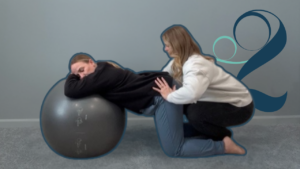
Counter pressure during labor is exactly what it sounds like. Applying firm, steady pressure to a specific area (usually the low back or sacrum) to offset the intensity of a contraction.
It’s one of the most consistently helpful comfort measures we use as doulas, and it requires no special equipment. A support person can learn how to do it in a birth class or even just from a quick walkthrough in the room. Before we go further, don’t miss our amazing blog on using a birthing ball, or how your partner can help.
The double hip squeeze: a support person places both hands on the hip bones and presses firmly inward during a contraction
Sacral pressure: firm palm pressure on the lower back at the base of the spine
Counter pressure works especially well for back labor, when contractions are felt intensely in the lower back rather than the abdomen. If that’s what you’re experiencing, this is worth trying right away.
We cover counter pressure and other hands-on coping tools in depth in the Comfort Measures for Labor course. It’s a great way to get your support person comfortable with these techniques before birth day.
This one is harder to put in a bullet list, but it might be the most important section.
A lot of people go into labor with an internal timeline, a sense that things should be progressing at a certain rate, and if they aren’t, something is wrong. That pressure is real, and it comes from everywhere: previous births, social media, well-meaning family, and the way hospital settings are sometimes structured around the clock.
What we see over and over is that when someone is fighting their labor, whether that’s fighting the sensation, fighting the pace, or fighting the uncertainty, their body holds tension. And tension in the body works against what the uterus is trying to do.
Staying present in the current contraction instead of thinking about what might come in 10 hours
Shifting language from “pain” to “intensity” if that framing feels more true (many people find it does)
Keeping low tones and slow exhales rather than high, tight, chest breathing
Letting your jaw soften during contractions (your jaw is directly connected to your pelvic floor, releasing one helps release the other)
We’re not suggesting that you should feel no discomfort or that mindset alone controls the outcome. It doesn’t. But how you respond to what your body is doing has a real effect on the experience and sometimes on how things unfold.
Just as useful as knowing what helps is knowing what tends to slow things down. A few patterns we see repeatedly:
None of these things guarantees a longer or more difficult labor. But reducing the ones you can control gives your body more room to work.
Since the internet loves a list of things to try at 37 weeks, here’s our honest take on the most common ones.
This one has real merit. Walking uses gravity and the natural movement of the pelvis to encourage baby to descend. It’s not going to start labor from scratch, but once things are already moving, walking can help support progression. Just don’t overdo it early and exhaust yourself.
The research on this is genuinely interesting. Some studies suggest that eating dates in the last weeks of pregnancy may support cervical ripening and reduce the need for labor augmentation. Whether it causes labor is a different question, and the answer is probably no. But it’s a reasonable, low-risk thing to try.
Raspberry leaf tea doesn’t cause labor to start. What it may do is strengthen the uterine muscle so that when contractions do come, they’re more effective. Think of it as training the muscle, not pulling the trigger.
The honest answer is that there is no solid evidence behind these. But as Nikki puts it: did any of it hurt you? Probably not. And labor will happen when it happens, one way or another. If eating pineapple makes you feel like you’re doing something, go for it.
The bigger reality check from this episode is this: you can do everything right and still have a long labor. You can still need interventions. That doesn’t mean you failed. Anyone selling you a guarantee is selling you something that doesn’t exist in birth.
For those who want to dig into the research, this PubMed study on peanut ball use in labor is a solid starting point for understanding the evidence behind positioning tools.

Episode 50
A smoother labor is rarely about one thing. It’s about consistently supporting your body once things get going, and giving it what it needs in each moment. Move when you can. Stay hydrated. Rest in the early hours. Use your coping tools. Let your support team do their job. And try, even when it’s hard, to trust that your body knows what it’s doing.
There is no amount of preparation that removes all unpredictability from birth. But coming in informed, fueled, and supported makes a real difference in how you experience it.
We talked through all of this in depth on Episode 50 of the Mom2Mom Podcast. If you want to hear Stephanie and Nikki walk through these ideas in real time, including the rapid-fire internet hack breakdown, give it a listen.
Listen to the full episode here: Episode 50: Natural Ways to Progress Labor on the Mom2Mom Podcast.
And if you’re thinking about adding a doula to your birth team, we’d love to connect. Head to how2mom.com to learn more about our birth doula services and what it looks like to have support in the room with you.

Any/all of the links in this blog may be affiliate links of which How 2 Mom, LLC receives a small commission, without any additional cost to you. Using affiliate links help us maintain our website, continue to provide for our community, and support our families, and we are forever grateful for your support!